
Spot IRS Scams and Guard Your Finances
The IRS usually contacts you first by mail, and it will never demand immediate payment by gift card, wire transfer or cryptocurrency. If a call, text or email says otherwise, it’s almost certainly a scam.
By Richard James, Enrolled Agent | James Family Tax
Taxes are stressful, and scammers are aware of this. That’s why IRS scams are so prevalent. These fraudulent attempts to impersonate the Internal Revenue Service and deceive unsuspecting individuals have become increasingly sophisticated over the years.

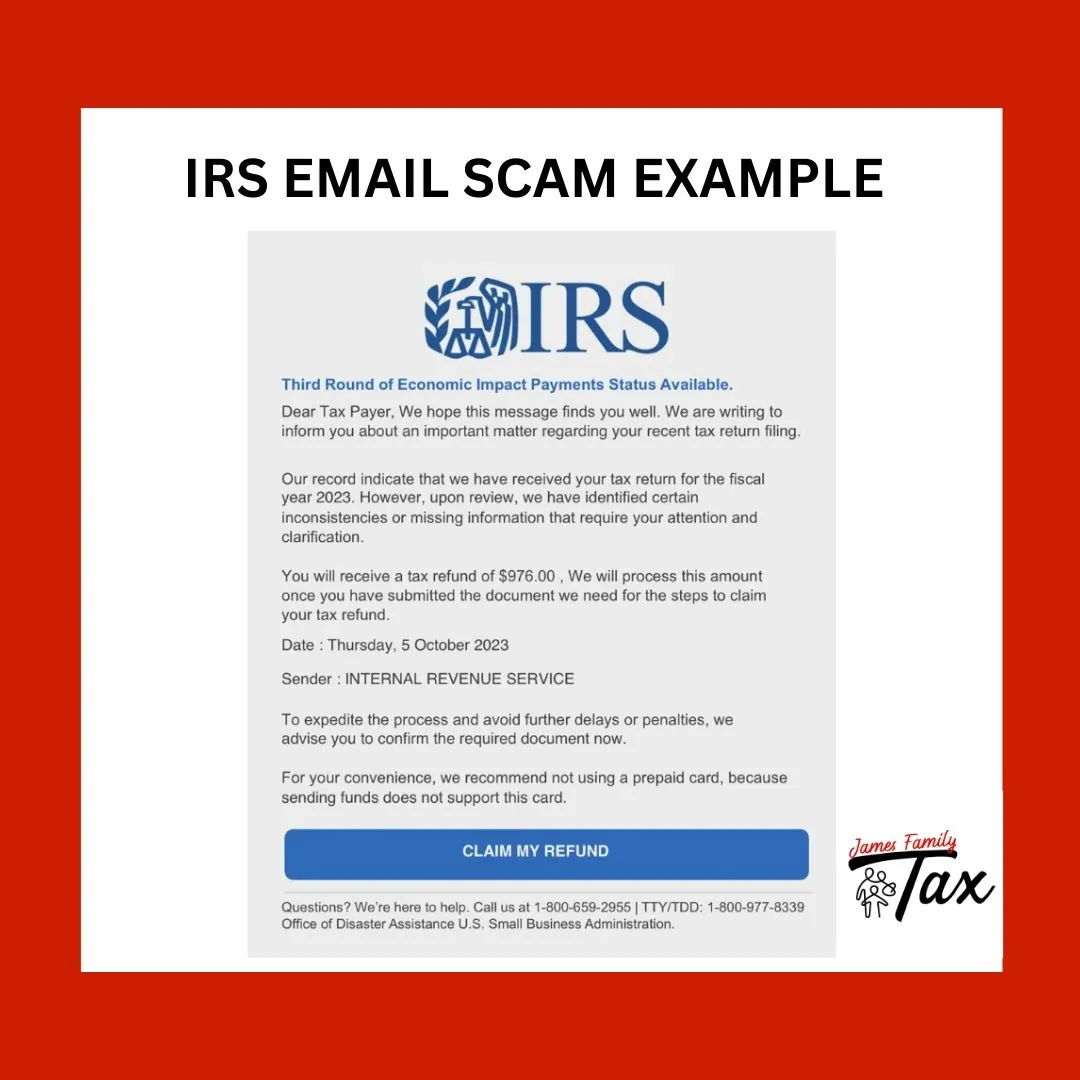
At James Family Tax we’re proud to be one of the most trusted & best rated tax services in San Antonio. We have had several clients come to us with e-mails they have received that look like they are from the IRS claiming they have a refund owed to them. These e-mails look authentic and even have the IRS branding but The IRS will not initiate contact with you by e-mail. I have included an example of a scam e-mail below so that you can be aware of just how advanced scammers are becoming.To protect yourself and your finances, it’s crucial to know how to spot an IRS scam. In this blog, we’ll walk you through the key signs that can help you identify these scams and avoid becoming a victim.
1. Unexpected Phone Calls
One of the most common tactics used by IRS scammers is unsolicited phone calls. They often use threatening language and may even claim that you owe back taxes or have legal issues pending. The IRS doesn’t initiate contact by phone without first sending multiple notices by mail. If you receive an unexpected call from someone claiming to be from the IRS, be highly skeptical.
2. Unsolicited Emails or Texts
Beware of unsolicited emails or text messages that appear to be from the IRS. Scammers may use official-looking logos and language to trick you into revealing personal information. The IRS does not initiate contact via email or text for tax-related issues. If you receive such a message, do not click on any links or provide any information.
3. Demands for Immediate Payment
IRS scammers often create a sense of urgency, insisting that you owe money and must make immediate payment. The IRS will never demand immediate payment without first giving you the opportunity to question or appeal the amount they claim you owe. If someone pressures you to make an on-the-spot payment, it’s a red flag.
4. Threats of Legal Action
Scammers may threaten legal consequences, such as arrest warrants or deportation, to scare you into complying with their demands. The real IRS will not make such threats over the phone or through unsolicited communication. Be highly skeptical of anyone who uses these tactics.
5. Request for Personal Information
Be cautious about sharing personal or financial information with anyone over the phone, email, or text. Scammers often ask for Social Security numbers, bank account details, or credit card information. The IRS typically communicates through secure channels and will not request sensitive information via these means.
6. Verify the Caller or Sender
If you receive a call or message from someone claiming to be from the IRS, don’t hesitate to verify their identity. Ask for their name, badge number, and a call-back number. Then, independently confirm their identity by calling the official IRS phone number listed on their website (not any number they provide).
7. Report Suspected Scams
If you suspect you’ve encountered an IRS scam, report it to the IRS. This can help prevent others from falling victim to the same scheme.
Identity thieves use phishing emails to trick users into giving up passwords and other information.
The IRS also wants your help.
You can take a few simple steps to protect all your digital devices and better protect your personal and financial data online and at home.
Here are some steps the IRS wants you to consider to protect yourself from identity thieves.
Keep Your Computer and Mobile Phone Secure
• Use firewall and security software set it for automatic updates
• Treat your personal information like cash; don’t leave it lying around
Use strong, unique passwords; consider a password manager.
• Use Multi-Factor Authentication
• Give personal information only over encrypted websites - look for “https ”addresses
• Back up your files.
Avoid Phishing Scams and Malware
Don’t take the bait.
Look for:
• Emails that pose as trusted sources, i.e., banks and tax providers.
• Emails with an urgent message, i.e., update your account now! with instructions to open a link or attachment.
• Never download software or apps from pop-up advertising.
• Talk to family about online security, both with computers and mobile devices.
Protect Your Tax Return
Taxpayers who can validate their identities can obtain an Identity Protection PIN. An IP PIN is a six-digit code that prevents an identity thief from filing a fraudulent tax return using your Social Security number. Learn more at www.irs.gov/ippin. If you are an identity theft victim and your tax account is affected, review www.irs.gov/identitytheft.
Avoid IRS Impersonators.
The IRS will not call you with threats of jail or lawsuits.
The IRS will not send you an unsolicited email suggesting you have a refund or that you need to update your account.
The IRS will not request any sensitive information online.
These are all scams, and they are persistent. Don’t fall for them. Forward IRS-related scam emails to phishing@irs.gov. Report IRS- impersonation telephone calls at www.tigta.gov.
IRS scams can be financially devastating and emotionally distressing, but with the right knowledge, you can protect yourself.
By being vigilant and recognizing the signs of a scam, you can safeguard your finances and personal information. Remember, the IRS communicates primarily through mail, and they do not use threatening tactics or demand immediate payment. If you ever doubt the legitimacy of a communication, reach out to the official IRS contact information listed on their website to verify its authenticity. Don’t become a victim—stay informed and stay safe.
For more information on scams, check out IRS.GOV
James Family Tax is Here For You!
At James Family Tax, we pride ourselves on treating our clients like family. This means not only will we work hard to understand your financial circumstances and file your return accordingly, but we also connect with our clients on a personal level. Whether you’re getting married, buying a new home, having a baby, or experiencing another major life event, we’ll help you understand how your personal experiences can impact your return.
We understand the importance of choosing the best tax service for your family and are dedicated to helping you make the right choice. We aim to ensure you leave your tax appointment feeling confident about your tax filing.
As one of the top-rated tax services in San Antonio, we take great pride in being recognized as the 2023 YourSA Readers Choice Award Winner, a testament to our unwavering commitment to excellence in serving the local community and beyond.
We value your time and believe in providing you with complete confidence and transparency regarding your taxes. Whether you’re a family or a small business, we work closely with our clients to achieve the best tax outcomes possible.
Check out our website and find us on Google, Facebook, and Instagram @Jamesfamilytax. Schedule your tax appointment today at , and let us take care of your tax preparation needs!

Enrolled Agent | Tax & Business Consultant
“I strive to build strong relationships with our clients. It’s about treating every client as a valued individual and understanding the uniqueness of each family and business I am privileged to work with. I enjoy working with small businesses to help ensure that they set themselves up for lasting success.”
How James Family Tax Can Help
Behind on filing or holding an IRS letter? Our team handles prior-year returns, amendments and IRS correspondence, so you don’t have to face it alone.
Book an appointment at our San Antonio or Schertz office, or call (210) 864-1788.
Related reading: Haven’t Filed Taxes? Here’s What You Can Do